
How many restrooms does a race need?
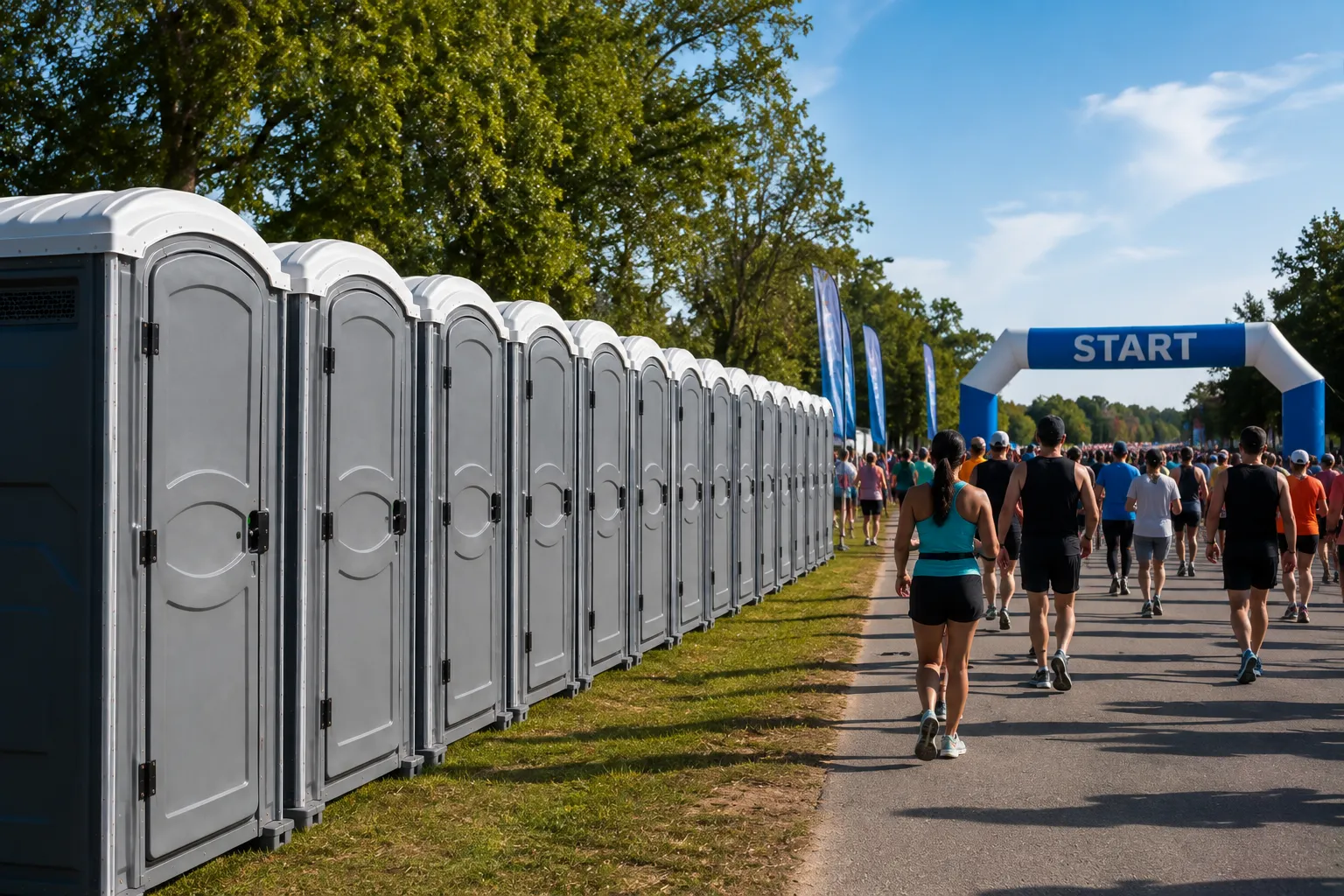
Start with runner count, then split it across the course instead of clustering everything at one line. A standard unit holds a 60 to 70 gallon tank, and for a race that means planning restroom breaks about every 2 to 3 miles at aid stations, plus a heavier cluster within a quarter mile of start and finish. Standard porta potty rental covers most of that need, and OSHA 1926.51(c) sets a baseline of 1 toilet per 20 workers on a jobsite, which race organizers often use as a rough planning ratio for staff and volunteers even though runners are a separate crowd calculation. For a full breakdown by expected attendance, how many porta potties do I need walks through the math step by step. Races with wheelchair divisions or adaptive athletes need accessible units too: ADA Standards section 213.2 requires that where single-user units are clustered, at least 5 percent must be accessible, with never fewer than one. Blue Peak Porta Potty stocks ADA accessible porta potty units built to that standard, with a 60 inch turning circle inside per ADA 304.3.1 and a 32 inch clear door opening under ADA 404.2.3. For a longer race weekend with a VIP tent or sponsor area, a deluxe flushable porta potty upgrades the experience without adding plumbing. Pair the toilet count with handwashing station rental at food and hydration stops, since OSHA 1926.51(a)(1) calls for an adequate supply of potable water at any workplace, and race staff manning those tables count too.
Where should restrooms go on a race course?
Place restrooms at every aid station, not just the start line, and keep the surface underneath firm and level. ADA Standards section 302.1 requires floor and ground surfaces to be stable, firm and slip resistant, which matters most on grass medians and gravel shoulders common on Glendale race routes. Our porta potty placement guide covers clearance, ground surface and delivery access in more detail. If your course runs near construction zones or crosses a work site, check porta potty permit requirements before finalizing placement, since some corridors in Glendale sit inside the public right of way and that placement needs confirming with the city. Races that also run overnight setups, like a Friday-to-Sunday festival tied to the marathon weekend, often need temporary fence rental around staging areas and a light tower rental for early morning starts before sunrise. If your finish line area runs timing equipment, generators or a jumbotron, a temporary power pole keeps cabling off the runner path, and knowing how to brace a temporary power pole against wind and foot traffic matters on an open course where nothing anchors it to a building. Crews typically stake guy lines at three points around the pole base and route cable away from the runner lane entirely. For events drawing runners from Sun City, 9.1 miles northwest, or Litchfield Park, 12.1 miles west, stagger delivery times so units are serviced and locked in place well before the first wave crosses the start line.
What does race restroom rental cost?
Race restroom pricing depends on unit count, rental length and whether you need trailers instead of standalone units. A single-day standard unit typically runs in the $100 to $350 day-rate range, while an event-length rental for a multi-day race weekend often falls between $200 and $800 depending on unit type and count.
| unit | duration | typical price range |
|---|---|---|
| standard unit | event | $200 - $800 |
| ADA unit | day | $200 - $400 |
| deluxe flushable | day | $85 - $1,200 |
| restroom trailer | event | $2,499 - $3,899 |
See porta potty rental cost and restroom trailer rental cost for the full pricing breakdown by unit type. Larger races with VIP hospitality or a finish-line festival often step up to a restroom trailer rental, and an 8 stall restroom trailer handles high-traffic finish areas better than a row of standalone units. Delivery fees run separately from unit cost and scale with distance and timing; races near El Mirage, 11.3 miles northwest of Glendale, or Tolleson, 9.7 miles southwest, should confirm delivery windows early since race-day road closures affect truck access.
How far in advance should we book race restrooms?
Book 4 to 6 weeks out for a marathon-sized event, longer if you need restroom trailers or ADA units, since those categories have fewer units in rotation. Races under 1,000 runners can often book with 2 to 3 weeks notice. Contact request a quote with your runner count and course map to get an accurate unit count fast.
Do we need separate restrooms for volunteers and staff?
Yes, treat volunteer and staff restrooms as a separate count from runner-facing units. OSHA 1926.51(c) applies to worker sanitation, and race staff, medical tents and vendor crews should get their own cluster near command posts, not compete with runner lines at aid stations.
Can restrooms be moved mid-race if the course changes?
Units can be repositioned before the race starts, but not safely once runners are on course. Lock placement during your final route walk-through, ideally 48 to 72 hours out, so Blue Peak Porta Potty can confirm delivery access and stake units before race morning.
What happens if a unit needs servicing during a multi-day race weekend?
Blue Peak Porta Potty schedules service visits around your event calendar, not a fixed weekly cycle. ANSI/PSAI Z4.3 sets a baseline of one service visit per week for standard use, but multi-day races with heavy traffic need mid-event servicing, which we build into the event-length quote.
Do we need handwashing stations separate from the restrooms?
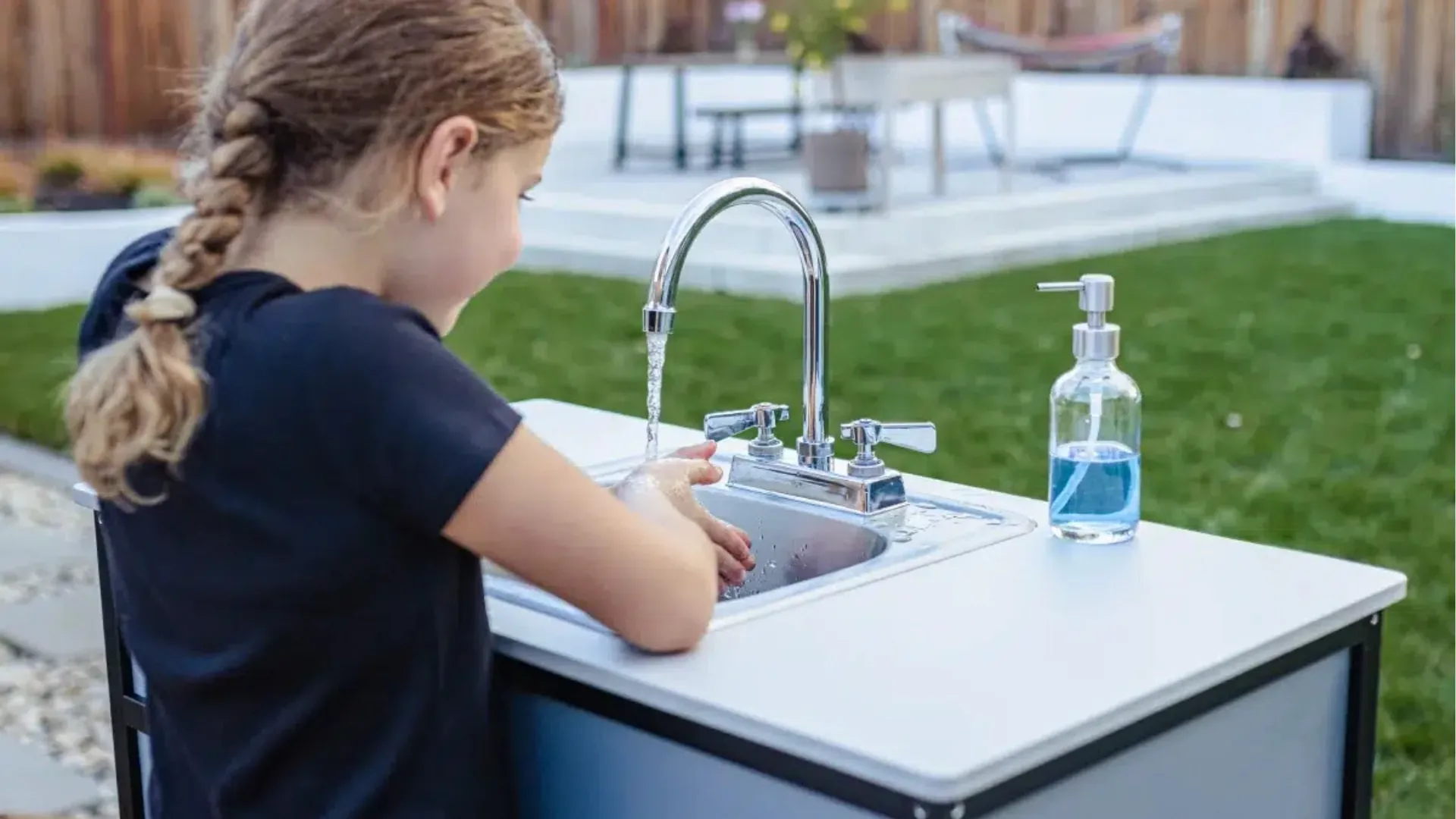
Yes, especially near food vendors and medical tents. 29 CFR 1910.141(d)(2) requires washing facilities to include soap and towels or a hand-drying device, since sanitizer alone does not meet that standard. See handwashing station requirements for placement guidance around race day.
Next step
Get a delivery date
Tell us the address, the dates and the headcount. We size the order and confirm the route.