
How Many Porta Potties Do I Need for a Construction Site?
OSHA 1926.51(c) sets the legal floor: 1 toilet facility for 20 workers or fewer, then 1 toilet seat and 1 urinal per 40 workers once you pass 20, and 1 seat and 1 urinal per 50 workers at 200 or more. That is the minimum, not the comfortable number. A crew of 15 on a Glendale remodel can often get by with one standard porta potty rental, but a 45-person framing crew working two shifts needs at least two units under the ratio, and most site supervisors add a third to keep foot traffic moving during breaks. If the job runs past a single week, a monthly porta potty rental usually beats renting by the day. Multi-story builds or sites spread across several acres need units placed near each active work zone, not clustered at the gate, since walking distance adds up fast on a 10 hour shift. Check the OSHA portable toilet requirements page for the full bracket table before you order, and see construction site services for what else a Glendale jobsite typically pairs with toilets, like a temporary fence rental or a light tower rental.
What Is the OSHA Bracket Table for Toilets on a Jobsite?
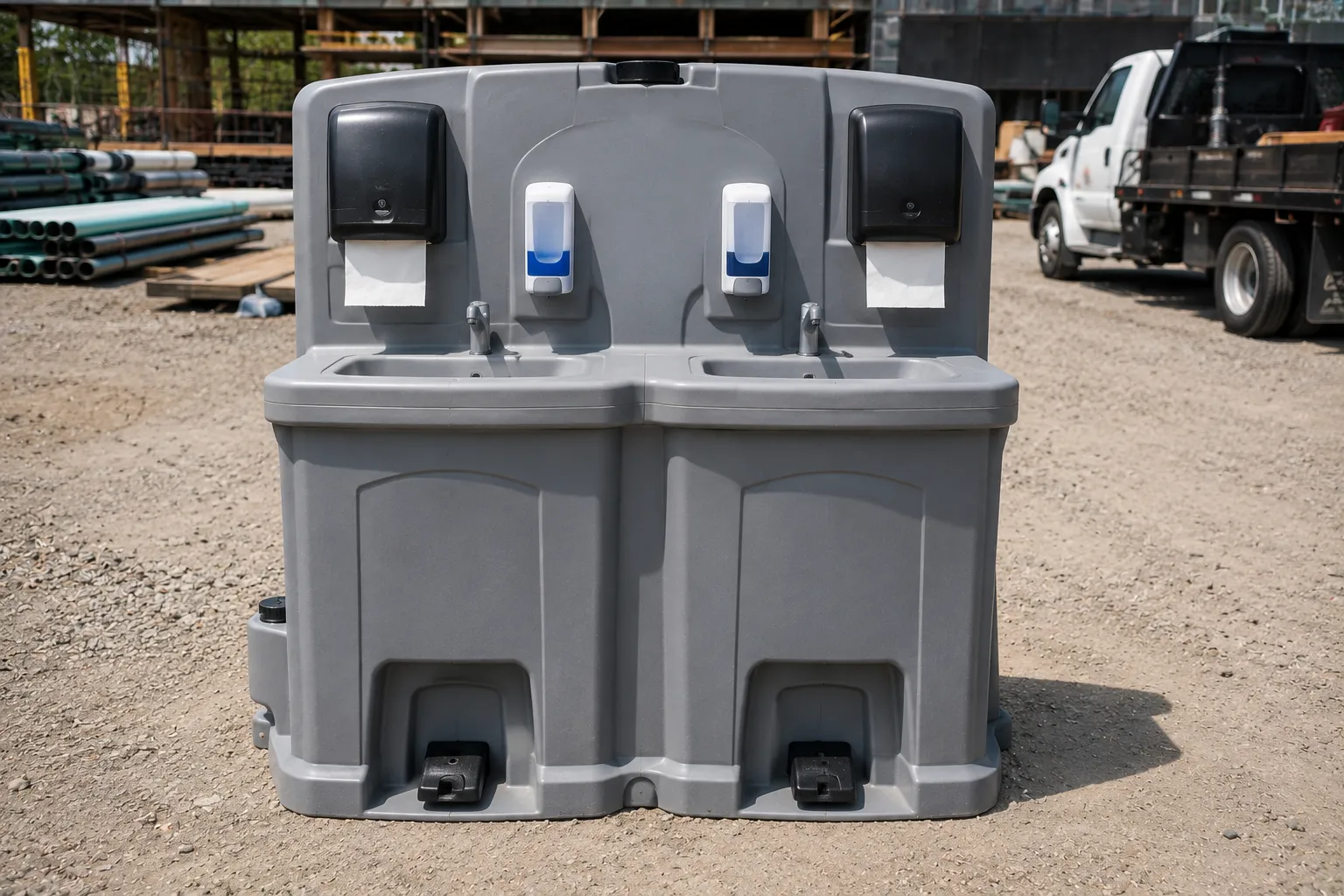
The brackets step up in fixed jumps, not a straight per-person ratio. Under 1926.51(c): 20 workers or fewer needs 1 facility. From 20 up to roughly 199 workers, add 1 toilet seat and 1 urinal for every 40 people. At 200 workers or more, the ratio eases to 1 seat and 1 urinal per 50. A 60-person Glendale site falls in the middle bracket and needs at least 2 combination units under the letter of the rule, though most contractors round up. Water matters too: OSHA 1926.51(a)(1) requires an adequate supply of potable water at all places of employment, separate from the toilet count. If your crew is applying paint, coatings, herbicides or insecticides, OSHA 1926.51(f)(1) also requires washing facilities for that specific work, and a handwashing station rental or portable sink rental covers that requirement cleanly. Review the full handwashing requirements page if your scope includes any of those materials.
How Many Porta Potties Do I Need for an Event?
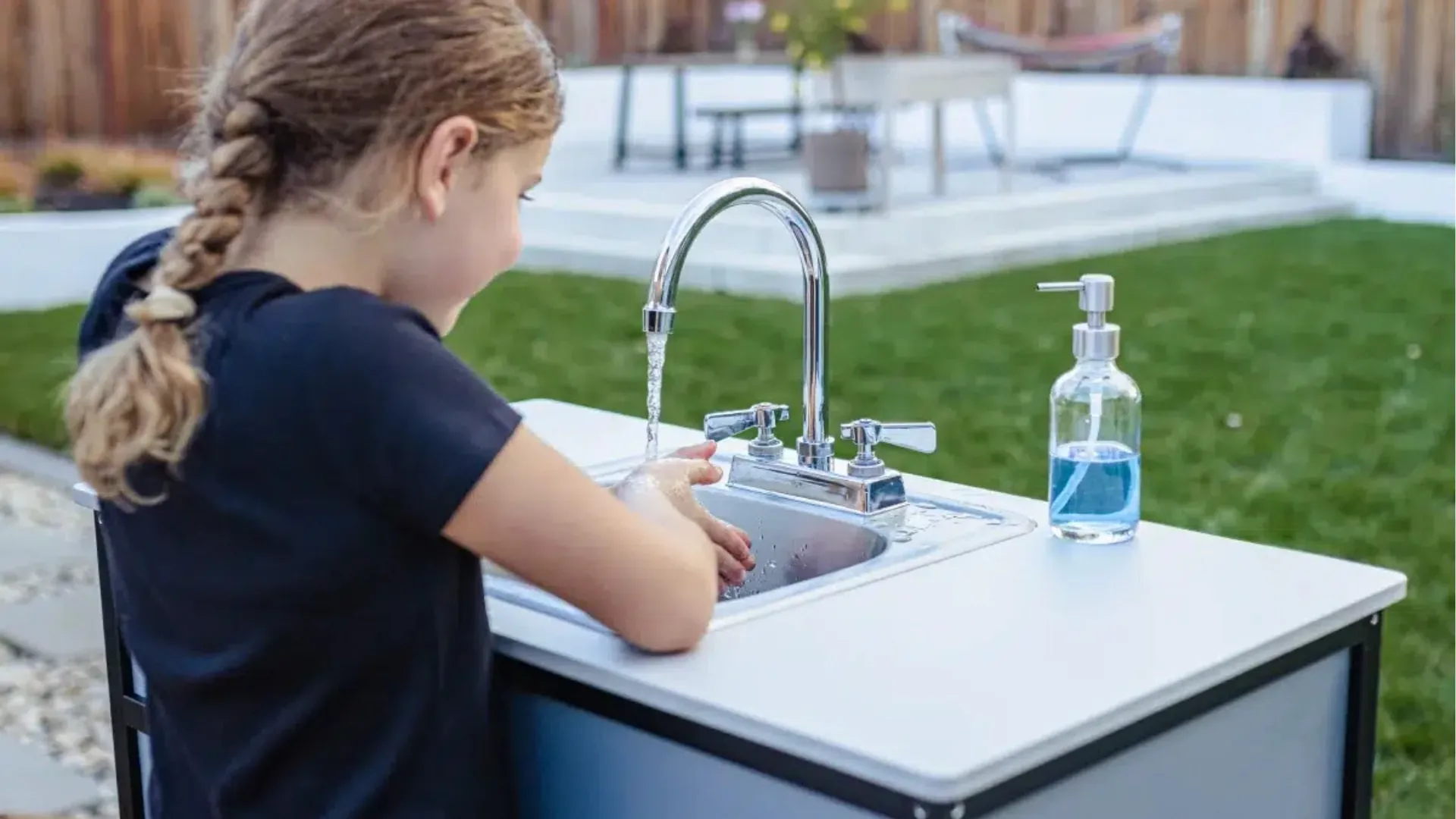
Events scale by guest count and hours, not worker headcount, and alcohol changes the math fast. A baseline of 1 standard unit per 50 guests for 4 hours works for a picnic or a small festival. Add units for anything longer or wetter.
| guests | hours | units (no alcohol) | units (with alcohol) |
|---|---|---|---|
| 100 | 4 | 2 | 3 |
| 250 | 4 | 5 | 7 |
| 500 | 6 | 10 | 14 |
| 1000 | 8 | 20 | 27 |
Alcohol service pushes usage up roughly 30 to 40 percent because people drink more fluid and use the restroom more often per hour. A wedding running 6 hours with a bar should also add at least one ADA accessible porta potty, and ADA Standards section 213.2 requires that where single-user units are clustered, at least 5 percent of them, and never fewer than one, be accessible. For a Glendale wedding or reception, pair standard units with a deluxe flushable porta potty near the guest tables. See event restroom rental, wedding restroom rental or festival restroom rental for setup guidance specific to each event type.
Do Multi-Day Events Need More Units Per Day?
Yes, but not a straight multiple. A 3-day festival does not need 3 times the single-day count, because service visits reset the tanks between days. ANSI/PSAI Z4.3 sets a baseline service interval of once per week for up to 10 users over a 40 hour week, which is why multi-day events in Glendale typically add one extra service visit per day rather than doubling unit count. A 500-guest event running 3 days at 6 hours each day should hold steady at 10 to 12 standard units but schedule a mid-event pump-out, especially if a bar is running. Concerts and marathons compress usage into short bursts, so concert restroom rental and marathon restroom rental plans usually front-load units near stages and finish lines rather than spreading them evenly across the grounds.
How Much Does the Right Number of Units Cost?
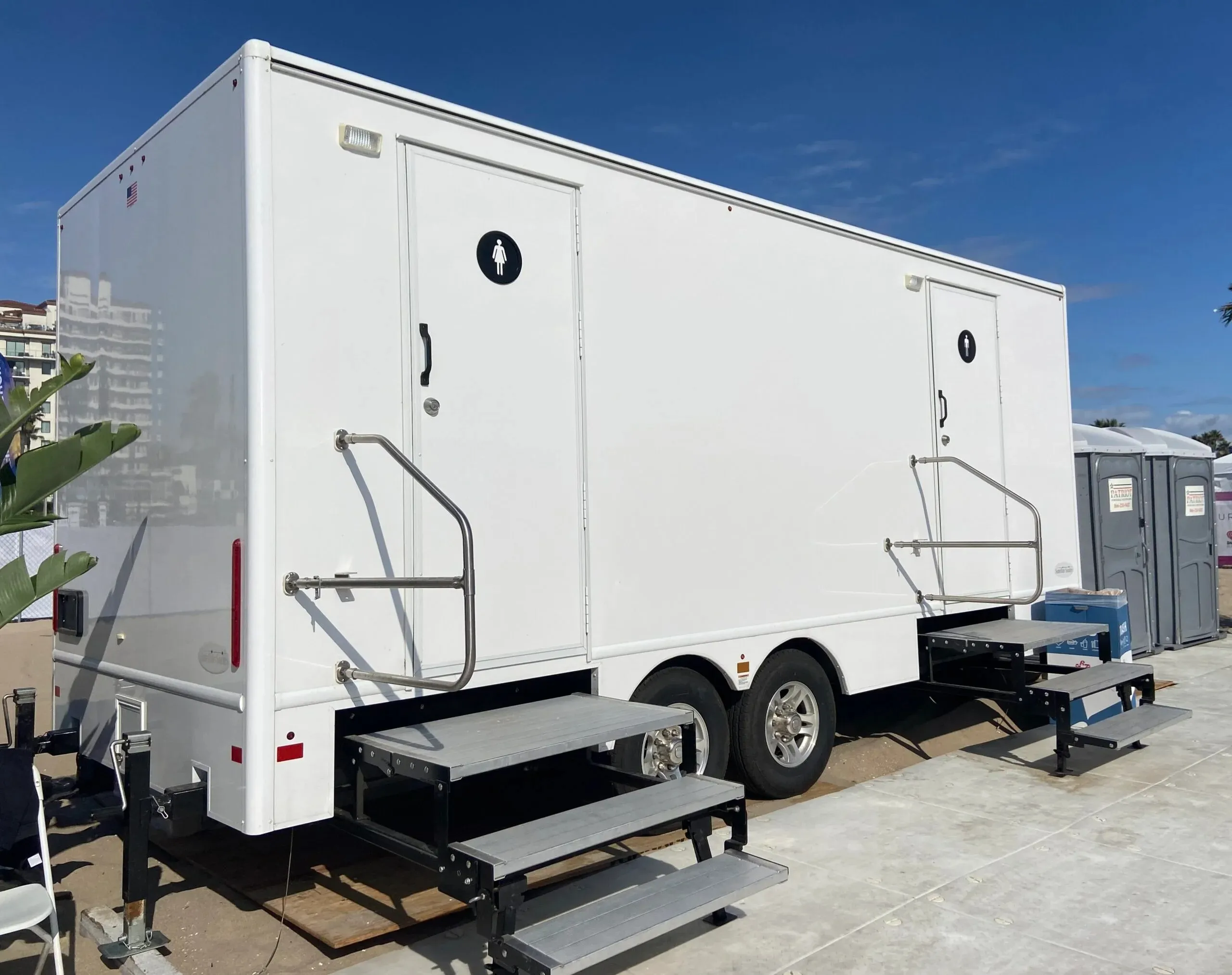
Pricing depends on unit type and rental length, and a longer rental costs more in total but less per day.
| unit | day | week | month |
|---|---|---|---|
| standard | 100 to 350 | 130 to 500 | 125 to 325 |
| ada | 200 to 400 | 120 to 240 | - |
| deluxe | 85 to 1200 | 150 to 290 | - |
A single-day event rental usually runs on the day rate, while a construction job spanning several weeks makes more sense on the monthly porta potty rental plan. Weekend rentals for events like a golf tournament or county fair carry their own short-term rate, generally higher per day than a week-long booking. Full breakdowns live on porta potty rental cost and porta potty rental per day, and delivery fees are separate from the unit rate itself.
How Many Cubic Feet and Tons Does a Dumpster Hold?
If your Glendale project pairs a renovation with a roll-off, size matters as much as toilet count. So how many cubic feet in a 10 yard dumpster? It holds about 10 cubic yards, which works out to roughly 270 cubic feet, and suits a single-room cleanout. That same box runs about 12 to 14 feet long, which answers how many feet is a 10 yard dumpster for anyone checking driveway space. A 20 yard dumpster holds about 540 cubic feet and typically handles 2 to 3 tons of mixed debris, common for a roof tear-off, which is the usual answer to how many tons does a 20 yard dumpster hold. A 30 yard dumpster runs closer to 810 cubic feet and can carry 3 to 4 tons, often used for a whole-house renovation, so how many tons can a 30 yard dumpster hold usually lands in that 3 to 4 ton range depending on material density. A 40 yard dumpster tops out near 1,080 cubic feet, which covers how many cubic feet in a 40 yard dumpster, and can hold 4 to 5 tons, which answers how many tons does a 40 yard dumpster hold for new construction debris. Box lengths follow a rough pattern too: a 10 yard box runs about 12 to 14 feet long, a 20 yard box closer to 22 feet. See exact dimensions on dumpster sizes and dimensions, and check dumpster weight limits before loading concrete, dirt or shingles, since those materials hit tonnage caps fast. A roll-off delivery needs about 60 feet of straight clearance behind the truck, so confirm driveway access before booking a roll-off dumpster rental.
Where Should Units Go on a Glendale Site or Venue?
Placement affects both usage rate and code compliance. Units need a stable, level surface, since ADA Standards section 302.1 requires floor and ground surfaces to be firm and slip resistant for any accessible unit. Keep a 36 inch clear path to each unit under ADA Standards section 403.5.1, and leave enough room in front of ADA units for the 60 inch turning circle required by section 304.3.1. On a construction site, group units near break areas rather than at the property line, since workers on a 45-minute lunch will skip a long walk. For events, keep restrooms visible from the main path but away from food service and seating. Glendale sites near Sun City, about 9.1 miles northwest, or Tolleson, about 9.7 miles southwest, often need generator-powered lighting near units after dusk; a light tower rental or temporary power pole covers that. Full siting guidance is on the porta potty placement guide and ada restroom requirements pages. If you are still unsure how many units your Glendale address needs, request a quote and describe the headcount, hours and site layout.
How many porta potties do I need for 100 guests?
Plan on 2 units for a 4 hour event without alcohol, and 3 if a bar is running. That covers the OSHA-style ratio events tend to follow even though OSHA 1926.51(c) technically applies to worksites. Add an ADA accessible porta potty if any guest needs one.
How many porta potties do I need for 20 workers?
Under OSHA 1926.51(c), 20 workers or fewer needs 1 toilet facility as the legal minimum. Most Glendale contractors still add a second unit once a crew passes 15 to 18 people, since one unit backs up fast during morning breaks.
How many tons does a 30 yard dumpster hold?
A 30 yard dumpster generally holds 3 to 4 tons of mixed debris, depending on material density. Concrete, dirt and shingles hit that cap faster than general construction waste. Check dumpster weight limits before loading heavy material.
How many cubic feet are in a 20 yard dumpster?
A 20 yard dumpster holds roughly 540 cubic feet, translated from its 20 cubic yard rated volume. That capacity usually handles a mid-size roofing job or a two-room cleanout without exceeding the tonnage cap.
Do I need more porta potties if alcohol is served?
Yes, add roughly 30 to 40 percent more units than a dry event of the same size. Alcohol increases both fluid intake and restroom frequency per guest. A 250-guest event with a bar should run closer to 7 units instead of 5.
How far in advance should I book units in Glendale?
Book as soon as your headcount and dates are set, especially for weekend events or multi-day festivals where demand is highest. Construction jobs on a monthly porta potty rental plan should confirm placement and access at the same time.
Next step
Get a delivery date
Tell us the address, the dates and the headcount. We size the order and confirm the route.