
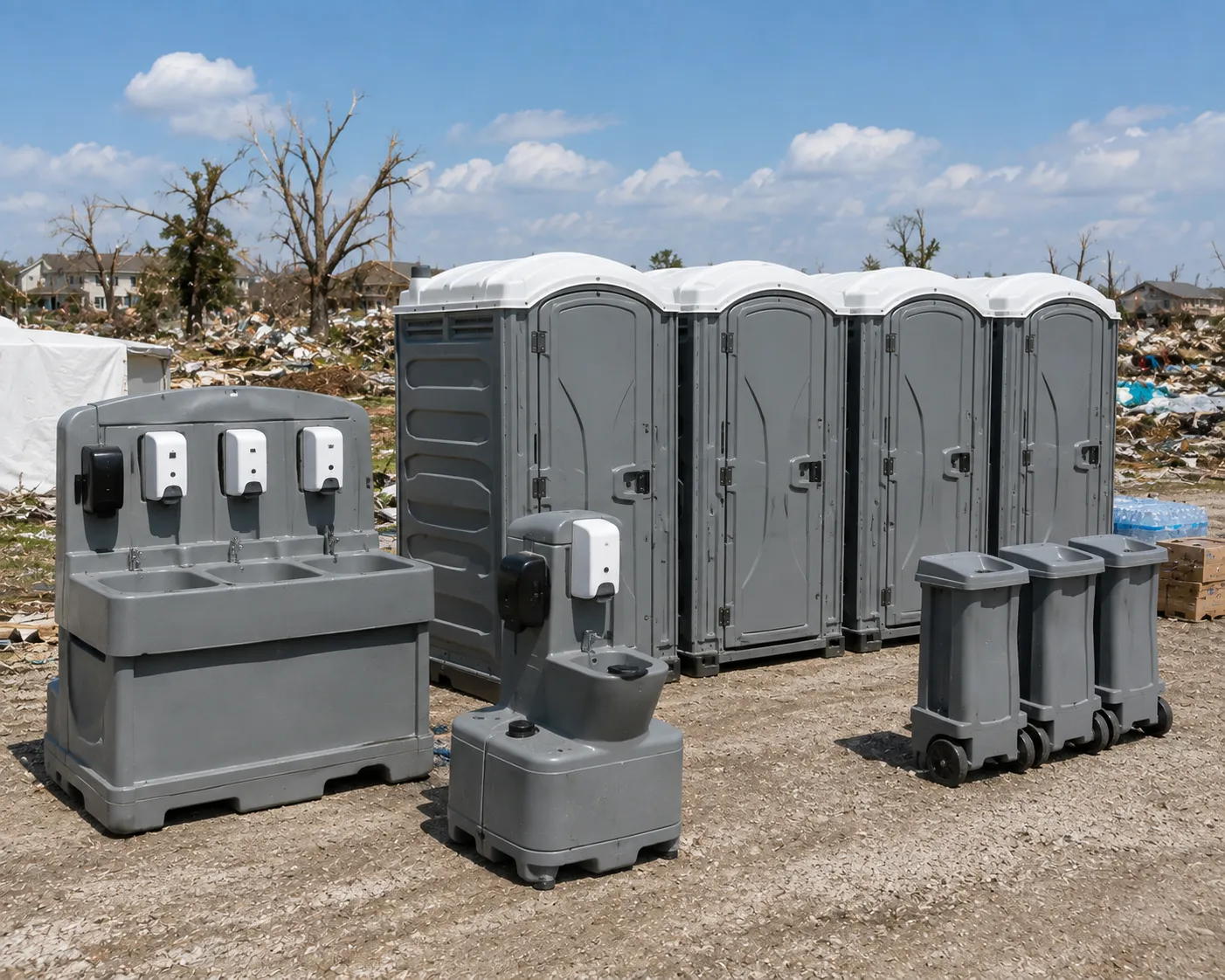
How fast can you deploy sanitation after a disaster in Glendale?
Speed depends on scale, but the model is the same every time: pre-staged units, a short call list, and drivers who already know the routes into Glendale. For a single shelter or command post, Blue Peak Porta Potty can often land the first standard porta potty rental units within hours of the request, not days. For a multi-site response spanning several shelters, schools, or a coordination point near Sun City, 9.1 miles northwest, the timeline stretches to match the truck count needed, not the paperwork.
Disaster response does not wait for a normal delivery window, so pricing reflects that. A standard unit on an emergency day rate runs in the same band as porta potty rental cost for planned work, but weekend and holiday surge windows carry a premium, and a service fee applies on top of the unit rate for after-hours dispatch. If the event runs past the first week, ask about a monthly porta potty rental rate instead of daily, since a longer commitment costs less per day. We also roll in handwashing station rental units automatically for any shelter deployment, because OSHA 1926.51(a)(1) calls for an adequate supply of potable water at any place of employment, and a shelter staffed around the clock counts.
What sanitation equipment does a disaster shelter actually need?
A shelter needs more than toilets. It needs a toilet-to-person ratio that holds up under stress, handwashing that does not run out of soap, and a way to keep the site from becoming a second hazard. OSHA 1926.51(c) sets the baseline most emergency planners use as a reference: one toilet facility per 20 people, scaling to one toilet and one urinal per 40 as headcount rises past 20, and per 50 once you cross 200 occupants. That ratio is written for construction crews, but it is the most defensible number available and we apply it to shelter populations too.
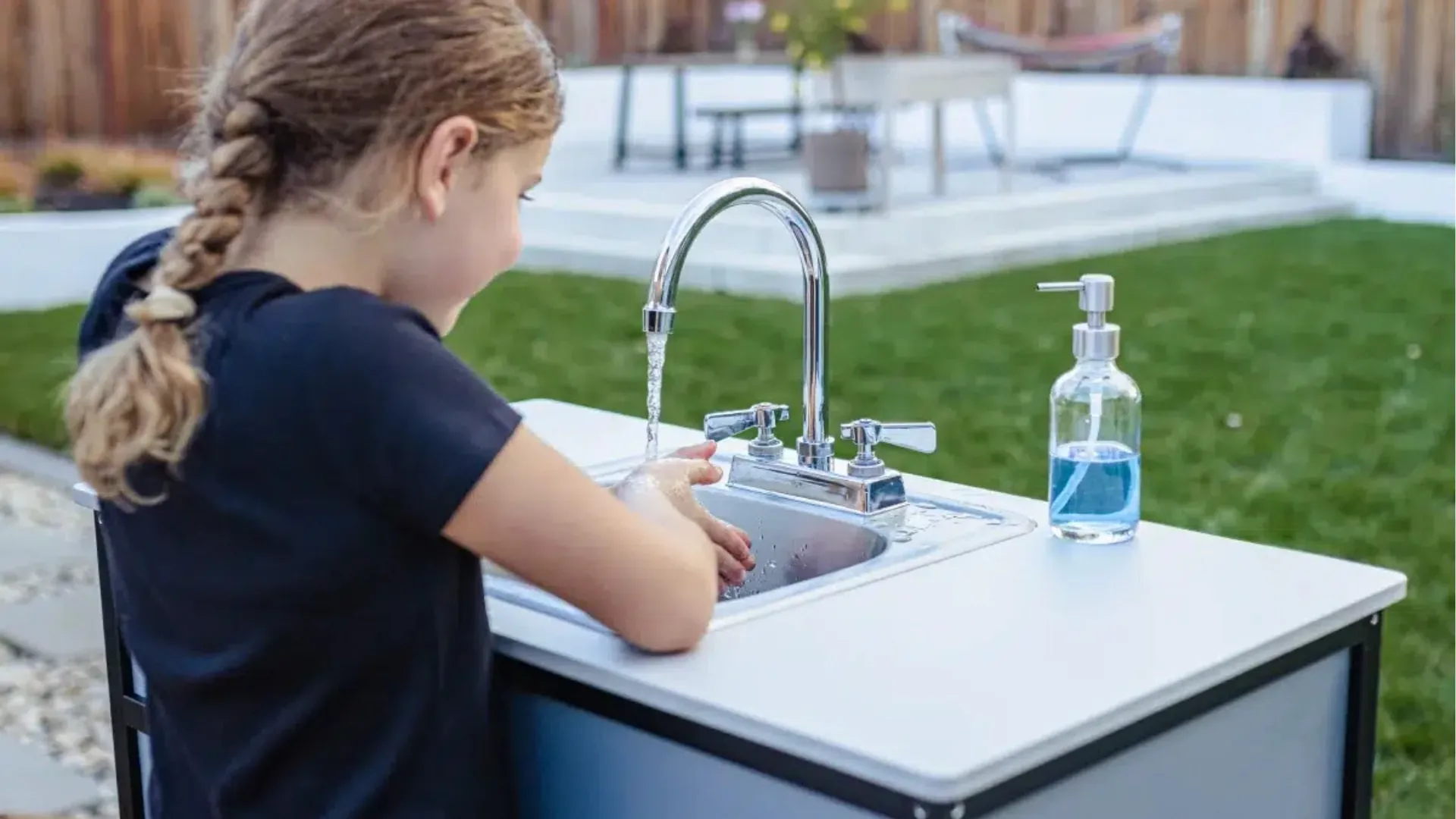
For accessibility, ADA Standards section 213.2 requires that at least 5 percent of clustered single-user units be accessible, never fewer than one, so every deployment past a handful of standard units needs an ADA accessible porta potty in the mix. 29 CFR 1910.141(d)2 requires soap and towels or a hand-drying device at wash stations, not sanitizer alone, which is why our portable sink rental units ship stocked, not empty. If the shelter is sheltering families for more than a few days, a restroom trailer rental or a shower trailer rental unit gives people something closer to normal, and a 4 stall restroom trailer covers a mid-size population without the footprint of an 8-stall unit. Debris removal runs in parallel: a roll-off dumpster rental clears storm debris and flood-damaged material fast, and OSHA 1926.25 still applies to housekeeping and clearing scrap from any active work area, shelter or otherwise.
Where do units get placed during an emergency response?
Placement follows the same logic as any porta potty placement guide, just compressed. Units need a stable, firm, slip-resistant surface under ADA Standards section 302.1, a 36 inch clear route per ADA Standards section 403.5.1, and enough level ground that a delivery truck can approach without backing over debris. In a disaster zone, that often means placing near a parking lot or open field rather than the exact building the shelter occupies, especially if the primary structure has flood or structural damage.
Glendale sits close enough to several nearby communities that a regional response can pull equipment in fast: Tolleson is 9.7 miles southwest, El Mirage is 11.3 miles northwest, and Litchfield Park is 12.1 miles west, all within a short haul if a Glendale-based fleet needs backup units. For sites with damaged fencing or open hazards, temporary fence rental secures the perimeter, and crowd control barrier rental keeps evacuee lines organized without improvised barricades that fall short of OSHA 1926.202 barricade standards. If flooding knocked out grid power to the shelter, a light tower rental or temporary power pole keeps the site workable after dark, and GFCI protection under OSHA 1926.404(b)(1)(ii) still matters even when the setup is temporary and urgent.
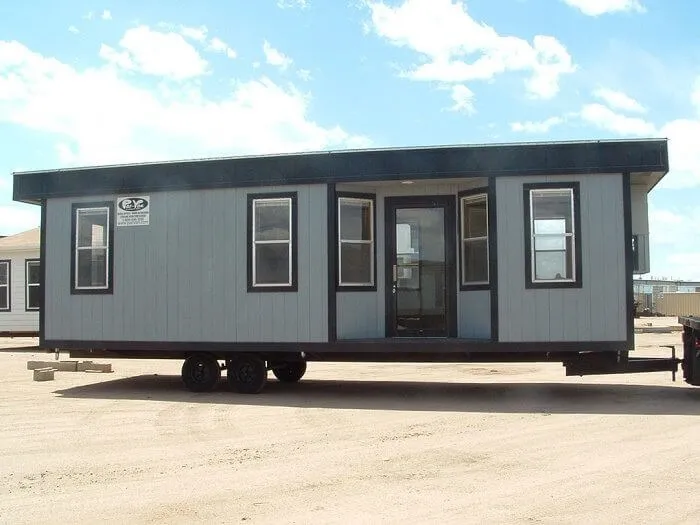
For storage of donated supplies or displaced equipment, a storage container rental or mobile office trailer rental gives coordinators a dry, lockable space fast. Every disaster deployment in Glendale gets built around the same core question any construction site services job asks first: how many people, for how long, and how do we get equipment there without adding to the chaos.
How many portable toilets does a shelter of 200 people need?
Using OSHA 1926.51(c) as the working ratio, 200 people lands right at the threshold where the standard shifts to one toilet and one urinal per 50. Plan for four to five combined fixtures minimum, plus at least one ADA-compliant unit under ADA Standards section 213.2, and add handwashing stations sized to match.
Can you deliver during an active weather event?
Often yes, if roads are passable and the site is safe for a truck. Blue Peak Porta Potty prioritizes emergency requests but will not send a driver into unsafe conditions. Call ahead through emergency porta potty rental and we will give you a real-time answer.
Do you work directly with shelters or only through agencies?
Both. We take calls from shelter operators, church coordinators, and emergency management contacts alike. Use request a quote or contact and tell us the site, headcount, and expected duration.
What if the disaster response runs longer than a week?
Switch from a daily rate to a monthly porta potty rental arrangement once the timeline clears seven to ten days. It is cheaper per day and lets us plan servicing intervals around ANSI/PSAI Z4.3's weekly baseline more efficiently.
Can you also handle septic or grease overflow from storm damage?
Yes. Storm-driven backups get handled through septic pumping service or emergency septic service, and grease interceptor overflow at damaged commercial kitchens falls under grease trap pumping.
Next step
Get a delivery date
Tell us the address, the dates and the headcount. We size the order and confirm the route.