
How Do Porta Potties Work?
Picture a booth about 44 by 48 inches on the ground and 92 inches tall. Under the seat sits the tank, holding 60 to 70 gallons of liquid mixed with a blue deodorizing chemical that controls odor and breaks down solids between pump-outs. There's no water line and no sewer line. That's the entire point of a standard porta potty rental - it works anywhere, from a Glendale backyard remodel to a construction lot with no utilities run yet.
A construction worker running to a porta potty during a break doesn't think about the tank underneath, but that tank is doing real work. ANSI/PSAI Z4.3, the industry standard for portable sanitation service, sets a baseline of one service visit per week for up to 10 users across a 40 hour week. Busier sites need more frequent pumping, which is why how often are porta potties cleaned matters more on a crew of 50 than a weekend party. Blue Peak Porta Potty schedules service around actual usage, not a fixed calendar.
For crews, OSHA 1926.51(c) sets the ratio: one toilet for 20 workers or fewer, then one toilet seat and one urinal per 40 workers as headcount climbs. That's the math behind how many porta potties do I need for a jobsite in Glendale.
How Do Flushable Porta Potties Work?
A flushable unit adds a small onboard freshwater tank and a foot pump or flush handle, so waste rinses down into the holding tank instead of sitting exposed. It still has no sewer connection - it's a closed-loop system, just a more comfortable one. That's the difference behind the deluxe flushable porta potty: a hand-rinse sink, a flush mechanism, and a chemical treatment in the tank that's the same principle as the chemistry in a standard unit, just paired with cleaner water going in.
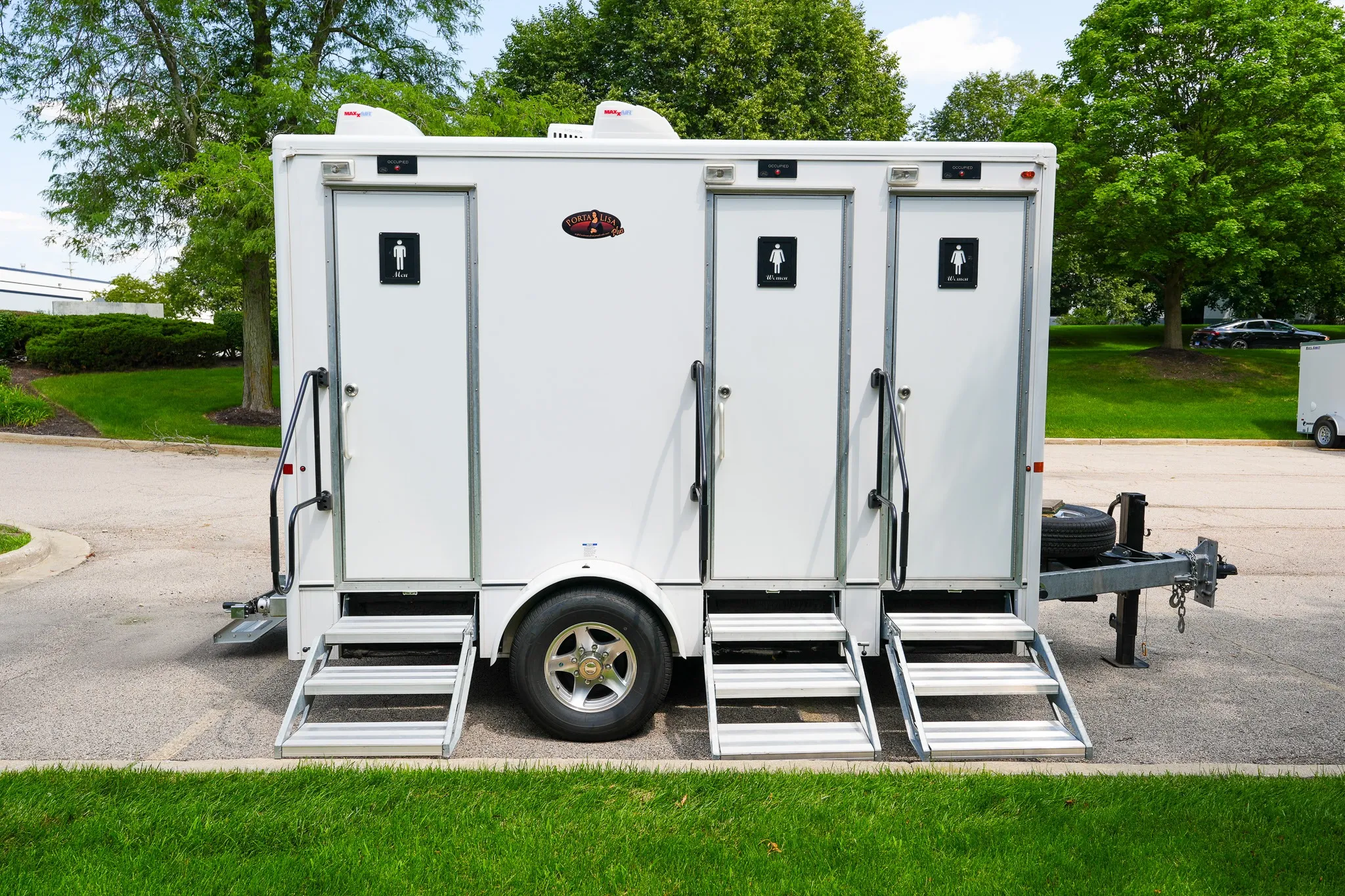
These units show up most on wedding restroom rental jobs and upscale events where guests expect something closer to a real bathroom. A luxury restroom trailer takes this further with multiple stalls, running water, and climate control, but the underlying idea is the same holding-tank system scaled up. If you're comparing options for a Glendale event, the restroom trailer rental page breaks down when a trailer makes more sense than a single flushable unit.
How Does a Portable Sink Work?
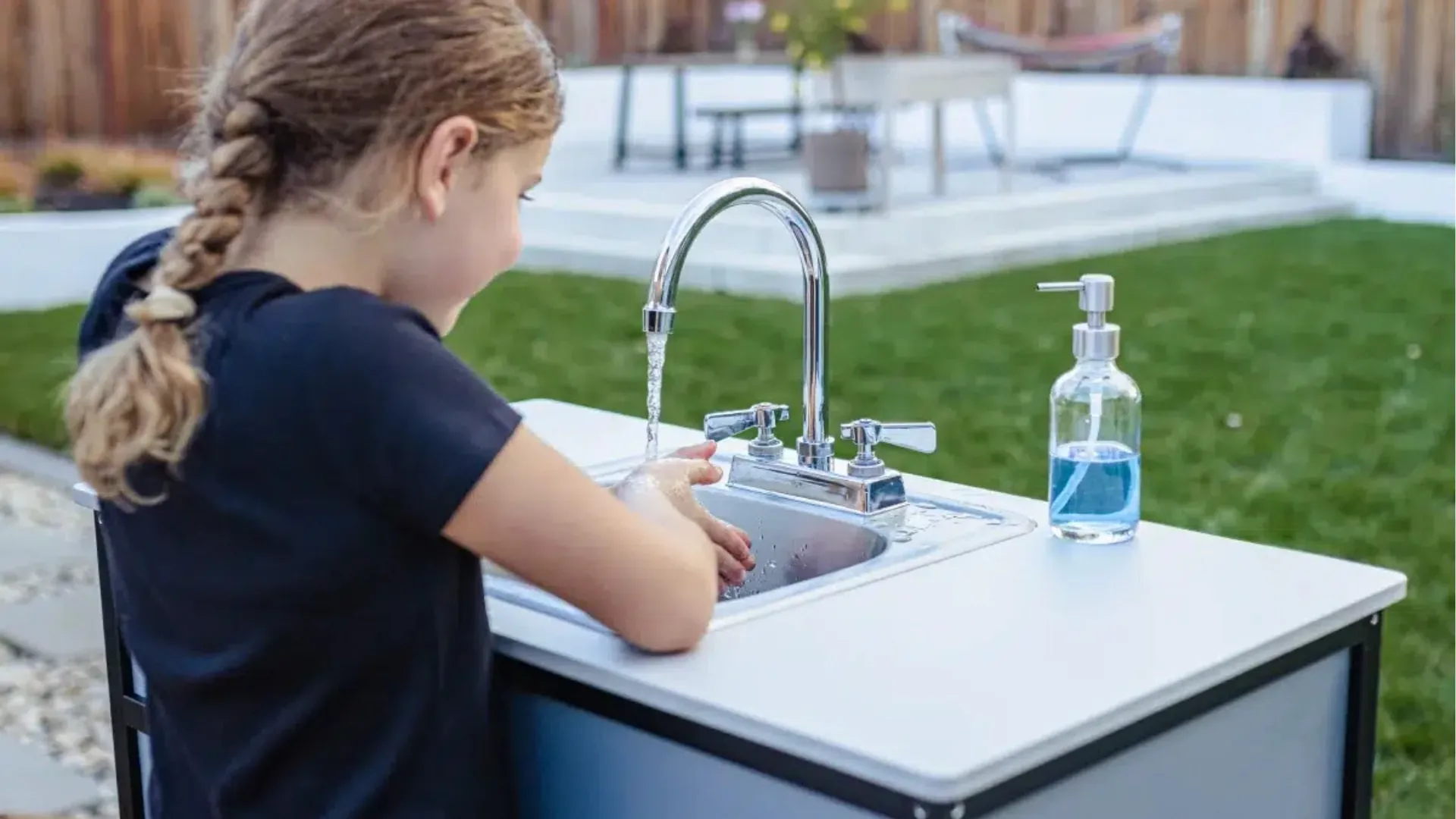
A portable sink runs on a similar principle: a freshwater tank feeds the faucet, usually by foot pump or gravity, and a separate gray water tank catches the runoff underneath. No hose bib, no drain line. Soap gets mounted on the unit too, because 29 CFR 1910.141(d)(2) requires washing facilities to include soap and towels or a hand-drying device - hand sanitizer alone doesn't satisfy that standard.
That distinction matters for job sites where crews handle paint, coatings, herbicides or insecticides. OSHA 1926.51(f)(1) requires washing facilities specifically in those contaminant situations, separate from the general toilet requirement. A handwashing station rental or a portable sink rental covers that need without running plumbing to a temporary site. Some crews ask about a hand sanitizer station rental instead, but it's a supplement, not a substitute, when the work involves the contaminants named in 1926.51(f)(1).
How Do Camping Porta Potties Work?
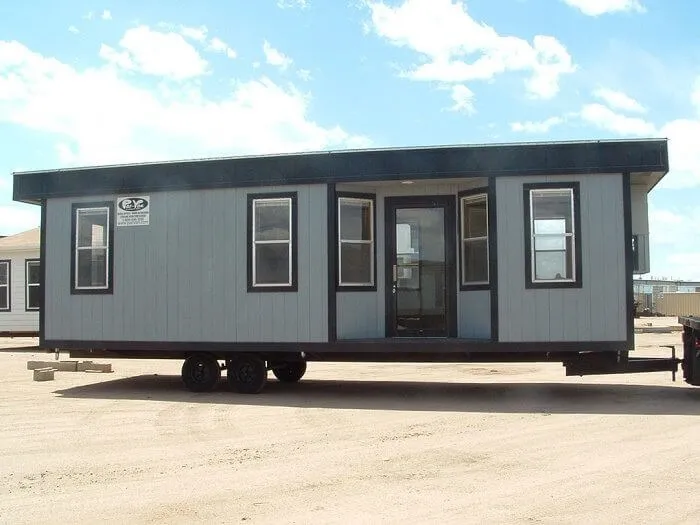
Camping units work the same way as a jobsite unit, just smaller and more portable, often a bucket-style toilet with a sealing lid and a smaller chemical-treated tank. For a group campout or a remote property near Glendale without facilities, a rented camping porta potty or a standard unit from portable toilet rental does the same job as the booth on a construction site: hold waste, treat it chemically, contain the odor.
The chemical is worth understanding because people search for portable toilet chemicals near me expecting something exotic. It's a deodorizing and digesting treatment, blue or green, that breaks down solid waste and masks odor between services. It's not related to septic tank cleaning chemicals, which treat a fixed underground tank rather than a portable one. If you're weighing a septic question instead of a portable toilet, septic tank cleaning and how often to pump a septic tank cover that separately, since a typical residential tank gets pumped every 3 to 5 years depending on tank size and household size.
Renters in Glendale comparing costs across event types can check porta potty rental cost or porta potty rental per day before booking, and longer jobs often do better on a monthly porta potty rental rate than repeated daily bookings. Homeowners near El Mirage, 11.3 miles northwest, and crews out toward Tolleson, 9.7 miles southwest, work with the same units and the same service cycle Blue Peak Porta Potty runs across Glendale.
Do porta potties smell?
They can, if service intervals stretch too long or ventilation gets blocked, but the vent stack and chemical treatment are built to control it. Heat and heavy use speed odor buildup. See do porta potties smell for what actually drives it and how service frequency fixes it.
How often are porta potties cleaned?
ANSI/PSAI Z4.3 sets a baseline of one weekly service for up to 10 users over a 40 hour week. High-traffic events or large crews need more frequent visits. Blue Peak Porta Potty adjusts the schedule based on headcount, not a flat weekly default.
Can I use a porta potty in winter?
Yes, with adjustments. Cold slows the chemical breakdown and can freeze tank contents in hard freezes, though Glendale rarely sees that. See porta potty in winter for how service intervals shift seasonally.
What permits do I need to place a porta potty in Glendale?
This depends on placement, especially near a public right of way, and needs confirming with the City of Glendale directly. Check porta potty permit requirements before finalizing a site plan, particularly for street-facing or event placements.
How many porta potties does my construction site need?
OSHA 1926.51(c) requires one toilet for 20 workers or fewer, then adds a toilet seat and urinal per 40 workers beyond that. Crew size, shift length and site layout all factor in. See how many porta potties do I need for the full breakdown.
Next step
Get a delivery date
Tell us the address, the dates and the headcount. We size the order and confirm the route.